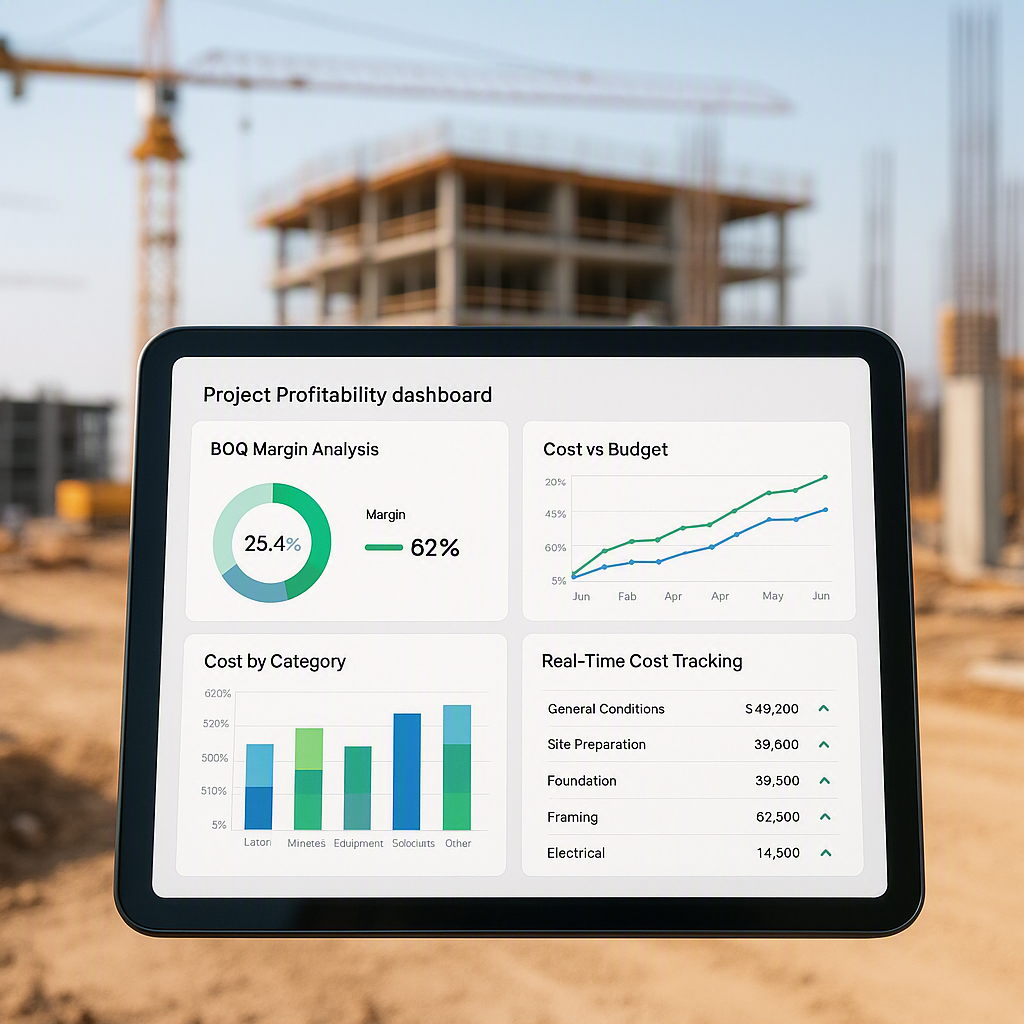
Construction Margins Formula: A Practical Guide for Contractors
Margins in construction are tough to hold on to. Between miscalculated BOQs, subcontractor overruns, and scope creep, even experienced contractors can see profits evaporate. But there's a way to stay ahead: using the right margin formula and tools to spot problems early.
Why Margins Matter More Than Ever
Margins aren’t just about profitability—they’re about survival. According to McKinsey’s 2022 Global Construction Survey, the average net margin for contractors globally hovers around 3-5%. It’s a razor-thin line, and every unexpected cost eats straight into that small buffer.
For mid-market contractors, especially in India and GCC, this is amplified by high material costs, fluctuating labor rates, and the need to manage multiple concurrent projects. If you’re not tracking margins down to the BOQ item, you’re flying blind.
The Construction Margins Formula
The formula to calculate gross profit margins in construction is straightforward:
Gross Profit Margin (%) = [(Revenue - Direct Costs) ÷ Revenue] × 100
But here’s the catch: calculating it accurately depends on breaking direct costs into granular categories like:
- Materials
- Labor
- Plant and equipment
- Subcontractor expenses
- Overheads
If you’re lumping all costs together without BOQ-level tracking, you’ll never know which specific items are eroding your profits.
The Role of BOQ Margin Reports
This is where BOQ Margin reports come in. Tools like JobNext’s BOQ Margin analysis are designed to give contractors a line-by-line breakdown of profitability. Instead of just seeing total revenue and total costs, you see:
- Contracted BOQ values
- Actual material, labor, plant, subcontractor, and overhead costs per BOQ item
- Profit or loss per BOQ line
Why does this matter? Because when a BOQ item shows a negative margin, you can immediately spot whether the cause is:
- Estimation errors (e.g., underpriced labor or materials)
- Scope changes that weren’t captured in contracts
- Procurement cost overruns
JobNext’s docs specifically recommend reviewing BOQ Margin reports weekly to catch these issues before they compound into major losses. Source: JobNext Help: Monitoring Project Reports
Illustrative Example: Catching Margin Erosion Early
Illustrative example — Let’s say you’re running a project with a BOQ item—foundation concrete—contracted at a certain value. Here’s what the BOQ Margin report might show:
| BOQ Item | Contract Value | Actual Cost | Margin |
|---|---|---|---|
| Foundation Concrete | Contracted Value | Higher Actual Cost | Negative Margin |
A negative margin on this item means something went wrong. By drilling down into the actual costs, you might find:
- Material cost overrun: Cement prices increased post-procurement.
- Labor inefficiency: Extra shifts were needed due to delays.
- Scope change: The client requested higher-grade concrete without revising the contract.
Without BOQ-level tracking, such losses might go unnoticed until the project closeout.
Common Mistakes Contractors Make
- Ignoring BOQ Margins: Too many contractors focus only on total profit figures and miss the granular losses hidden in specific BOQ items.
- Underquoting: Failing to account for realistic material and labor rates leads to razor-thin initial margins that disappear during execution.
- Overlooking Scope Changes: Small client requests (e.g., higher-grade materials) compound into untracked costs.
- Poor Procurement Timing: Delayed orders result in higher prices and rushed deliveries.
FAQ
Q: How often should BOQ Margin reports be reviewed?
Weekly. Waiting until the end of the project guarantees you’ll miss early signs of margin erosion.
Q: What’s the best way to track subcontractor costs?
Use structured workflows like JobNext’s subcontractor management system, which ties payments to approved measurement sheets. Source: JobNext Help: Subcontractor Management
Q: What’s the difference between markup and margin?
Markup is the percentage added to costs to set the selling price. Margin is the percentage of revenue that remains as profit after costs.
Call to Action
If margin erosion is a constant headache, JobNext’s BOQ Margin reports might be the solution you need. They’ve helped contractors catch hidden losses early and improve profitability. Learn more about JobNext →
Learn more at JobNext.ai