Why Margins Matter for Contractors
Margins aren’t just numbers on a spreadsheet. They’re the difference between a profitable project and one that eats into your bottom line. For contractors, margin erosion often happens invisibly. You quote a job thinking your estimates are solid, but untracked cost overruns creep in—labor runs over, materials cost more than expected, equipment sits idle. By the time you notice, it’s too late.
The BOQ Problem
Here’s the core issue: Bills of Quantities (BOQs) drive most construction bids. But once the project starts, actual costs often stray from your BOQ estimates. Maybe your subcontractors charge more than planned. Or material prices spike mid-project. Without regular tracking, these variances compound, eating into profits.
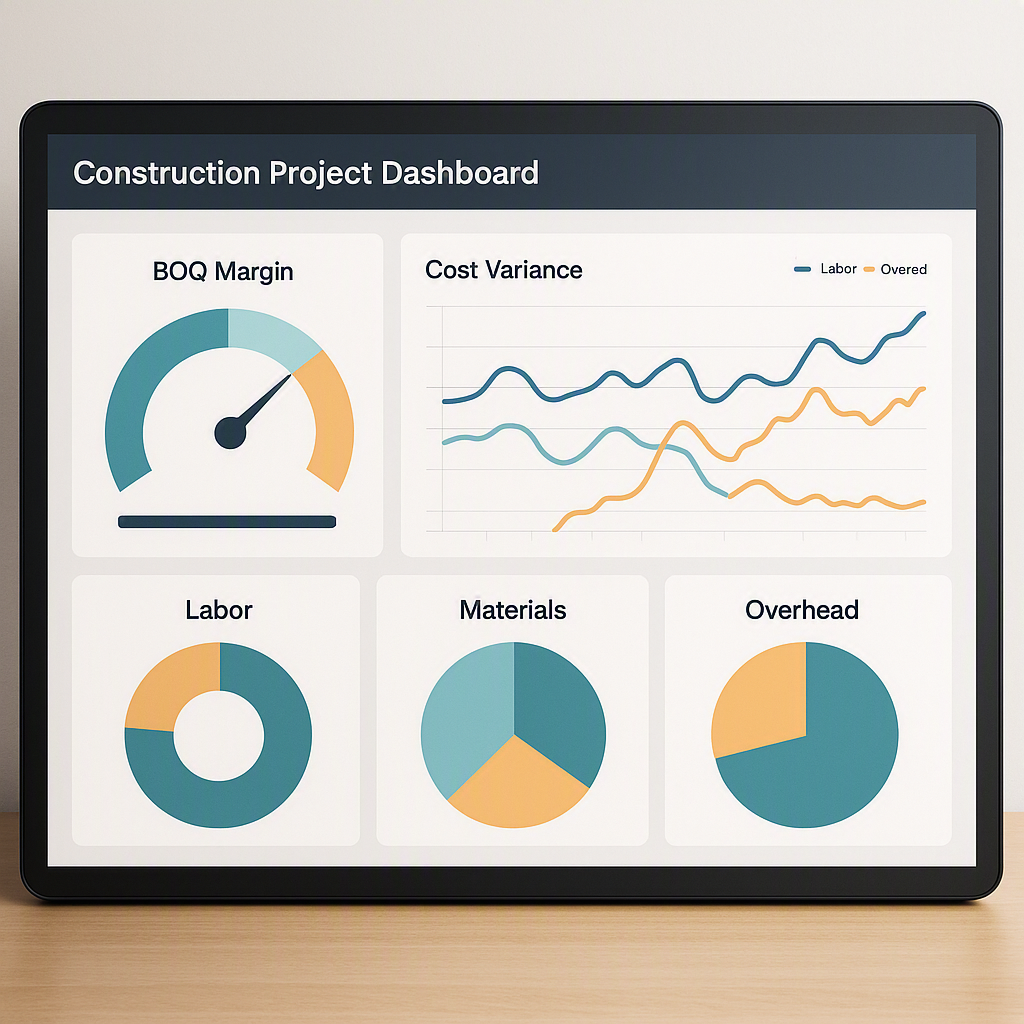
BOQ Margin Reports can help contractors identify where their contracted values are leaking—whether it’s labor, materials, equipment, or overhead. These reports are critical for maintaining profitability.
How BOQ Margin Reports Work
A BOQ Margin Report compares contracted values to actual costs across key resource categories:
- Labor: Cost overruns on site staff or additional manpower.
- Materials: Price fluctuations or wastage.
- Plant and Equipment: Idle machines or unplanned rental costs.
- Subcontractors: Scope creep or underperforming vendors.
- Overhead: Unbudgeted administrative costs.
Negative margins in any category signal trouble. For example, if material costs exceed your BOQ estimate, it could mean poor procurement planning—or uncontrolled wastage at the site. The report flags these issues early, so you can act before losses spiral.
Illustrative Example
Let’s say you’re running a project with a BOQ estimate for materials. Midway through the job, you notice actual material costs are significantly higher than estimated. This overrun might be due to price fluctuations or wastage during handling. Either way, you now know you need to tighten procurement controls or renegotiate supplier rates.
Why Regular Reviews Are Essential
One common mistake contractors make is reviewing margins only at project close. By then, you’re looking at sunk costs. Regular BOQ Margin reviews—such as weekly tracking—help catch problems early. This allows contractors to address issues like vendor disputes or scope miscalculations before they compound into larger losses.
Common Mistakes to Avoid
- Ignoring Variance Analysis: BOQ reports include variance analysis for a reason. If you don’t compare quoted rates to actual costs, you’re flying blind.
- Reviewing Margins in Isolation: A BOQ margin is only one piece of the puzzle. Pair it with resource reconciliation and project progress reports for a full view.
- Delaying Action: Spotting margin erosion isn’t enough—you need to act. Tighten approval workflows, renegotiate rates, or adjust project scopes as soon as issues arise.
FAQ
1. How do I calculate project profit percentage? Divide your net profit by total revenue, then multiply by 100. For example, if your revenue is ₹5 crore and profit is ₹1 crore, your margin is 20%.
2. Can BOQ Margin Reports help with subcontractor management? Yes. They highlight subcontractor cost overruns, making it easier to identify underperforming vendors or scope misalignments.
3. What’s the best way to review BOQ reports? Weekly. Combine BOQ Margin Reports with BOQ Rate Analysis for deeper insights into cost variances.
Conclusion
BOQ Margin Reports are a powerful tool for contractors to track costs, prevent overruns, and maximize profitability. Regular reviews and proactive action can make a significant difference in maintaining healthy margins throughout a project.
Learn more at JobNext.ai