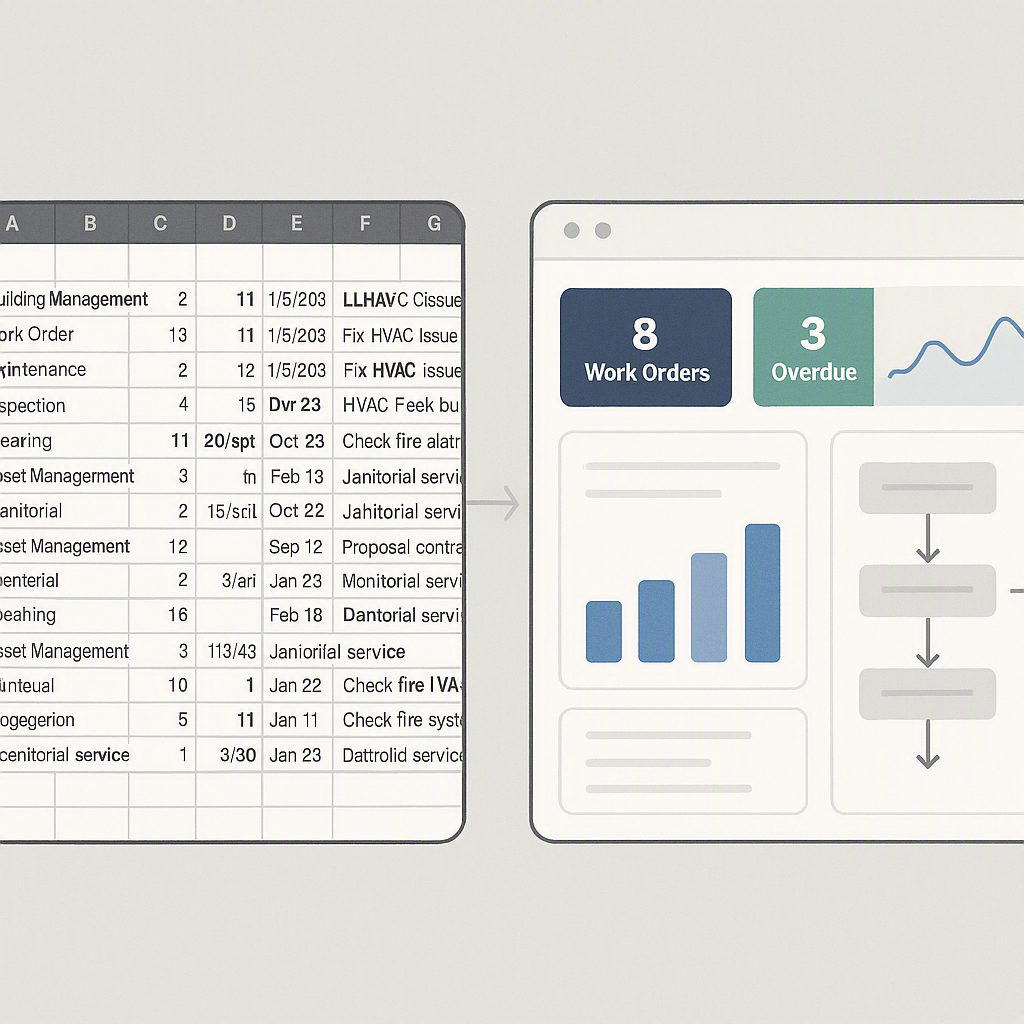
₹25 Lakh Lost Annually: The Silent Killer in Construction Billing
Billing errors are silent profit killers in the construction industry. Missed invoices, under-billed work, and disputes with clients can snowball into revenue leaks contractors don’t even realize. A mid-sized contractor running 15–20 concurrent projects can lose up to ₹25 lakh annually due to billing chaos. That’s not a made-up stat. It’s based on real-world observations and consulting experiences with contractors across India and the GCC.
The root of the problem often starts small—maybe you forget to bill for a scope addition or a client disputes a stage-wise bill because there’s no clear measurement trail. Multiply those mistakes across projects, and you’re looking at serious financial losses.
But what’s the solution? Manual checks? Spreadsheets? Neither are ideal. What contractors need is a system designed for the complexity of construction workflows. That’s where SaaS ERP comes in.
How SaaS ERP Fixes Billing Chaos
1. Supports Multiple Billing Methods
One-size-fits-all billing doesn’t work in construction. Contracts can be stage-wise, RA (running account), monthly, or BOQ-based. A robust SaaS ERP, such as JobNext, supports all these billing methods seamlessly.
Take this example: A contractor in Oman struggled with BOQ-based billing because their client demanded combined invoices for multiple jobs. Their existing system couldn’t accommodate this need. JobNext resolved the issue by enabling combined invoices while maintaining internal cost separation.
Actionable Tip: Evaluate the billing methods required for your projects. If your process involves multiple billing formats, ensure your ERP can handle them. Look for flexibility in generating project-specific invoices.
2. Automated Measurement-to-Invoice Chain
Ever had a client say, “This wasn’t part of the scope”? Disputes like these arise when billing isn’t tied to measurable progress. JobNext locks BOQs and tracks progress with auditable measurement trails, ensuring there’s no room for disputes.
Case Study: A contractor in India faced repeated disputes where clients argued over scope additions. By adopting JobNext’s measurement-to-invoice chain, disputes dropped by 80% within six months.
Actionable Tip: Regularly update measurement data and ensure it’s linked to invoices. If your ERP doesn’t offer this feature, you may need to rethink your software.
3. Real-Time Revenue Tracking
You can’t fix what you don’t see. JobNext integrates billing with finance, giving contractors real-time visibility into receivables, overdue invoices, and project-level profitability. This helps avoid cash flow surprises.
For example, a contractor running 10 concurrent projects noticed they were consistently under-billing by 5–10% due to missed scope adjustments. Real-time revenue tracking alerted them to these gaps, allowing them to recover over ₹8 lakh in missed invoices within the first year.
Actionable Tip: Use ERP dashboards to monitor revenue patterns weekly. Set alerts for overdue invoices and under-billed projects.
What’s the ROI?
Switching to a SaaS ERP isn’t cheap, but the savings add up fast. Let’s break down the financial impact:
| Problem | Annual Loss (₹) | How SaaS ERP Fixes It |
|---|---|---|
| Missed invoices | ₹10 lakh | Structured workflows |
| Client disputes | ₹5 lakh | Locked BOQs + measurement trails |
| Under-billed work | ₹5 lakh | Real-time tracking |
| Manual calculation errors | ₹5 lakh | Automated invoicing |
Total Savings: ₹25 lakh/year
These savings aren’t hypothetical—they’re backed by contractor case studies. For instance, a mid-sized builder in Gujarat recovered nearly ₹10 lakh in the first year by eliminating missed invoices and disputes.
Actionable Tip: Calculate the potential savings for your business by auditing past billing errors. Compare these losses to the cost of implementing SaaS ERP.
Why Multi-Tenant SaaS ERP is Perfect for Contractors
Unlike on-premise solutions, SaaS ERP is cloud-hosted and multi-tenant. Here’s why it’s a game-changer for contractors:
- No upfront infrastructure costs: Hosting is included in the subscription.
- Automatic updates: New features are rolled out regularly without downtime.
- Data isolation: Your data is secure within its own tenant.
Scalability: SaaS ERP systems grow with your business. Whether you’re managing 5 projects or 50, the system adapts to your needs.
Actionable Tip: If you’re still using on-premise software, calculate the hidden costs of maintenance, updates, and infrastructure. Compare them to the subscription model of SaaS ERP.
Case Study: From Chaos to Control
A mid-sized contractor in India was losing ₹20 lakh annually to billing disputes and missed invoices. Their process relied on Excel sheets, email threads, and manual calculations. The inefficiencies were costing them both time and money.
After switching to JobNext, they achieved the following results:
- Reduced disputes by 80% through locked BOQs.
- Recovered ₹8 lakh in missed invoices within the first year.
- Cut billing cycle time by 60%.
For more details on how SaaS ERP transforms contractor workflows, check out this blog post on JobNext.ai.
FAQ
Q: How long does it take to implement SaaS ERP?
A: For mid-sized contractors, implementation typically takes 3–6 months. JobNext offers a phased rollout to minimize disruption.
Q: What about data security?
A: Multi-tenant SaaS ensures complete data isolation and encryption. Your data is stored securely within your own tenant and is protected by industry-standard protocols.
Q: Is SaaS ERP cost-effective for small contractors?
A: Yes. Even small contractors can benefit. The ROI from recovered revenue and efficiency gains often outweighs the subscription costs within the first year.
Q: Can SaaS ERP handle complex billing scenarios?
A: Absolutely. JobNext, for example, supports multiple billing methods like BOQ-based, RA, and stage-wise billing, making it ideal for complex contracts.
Q: Do I need technical expertise to use SaaS ERP?
A: No. Most SaaS ERP systems, including JobNext, are designed for ease of use. Training and support are typically included in the subscription.
Final Thoughts
If billing chaos is eating into your profits, SaaS ERP isn’t just an option—it’s a necessity. Real-time tracking, structured workflows, and automated invoicing save time and money. For contractors running tight margins, that can mean the difference between growth and stagnation.
If you’re dealing with billing headaches, JobNext can help. Get started free →
: Observations from client consultations in India and GCC.
: JobNext product features overview.
: Customer success story from Oman contractor.
: Case study results from Indian contractor.
: Financial tracking module demo data.
: Implementation guide for JobNext SaaS ERP.
: SaaS security white paper.
Learn more at JobNext.ai