Why Margins Keep Slipping Away
Every contractor knows this story. You win the bid, the project starts, and halfway through, you realize the numbers don’t add up. Materials cost more than you expected, subcontractors are billing for extras, and equipment rental fees are eating into your profit. By the time the project wraps up, the margin you planned for has evaporated.
The worst part? You don’t catch it until it’s too late. Margins don’t disappear in one big chunk—they erode bit by bit, across dozens of BOQ (Bill of Quantities) items. Without a system to monitor profitability in real-time, small overruns compound into major losses.
The BOQ Margin Report: Your Early Warning System
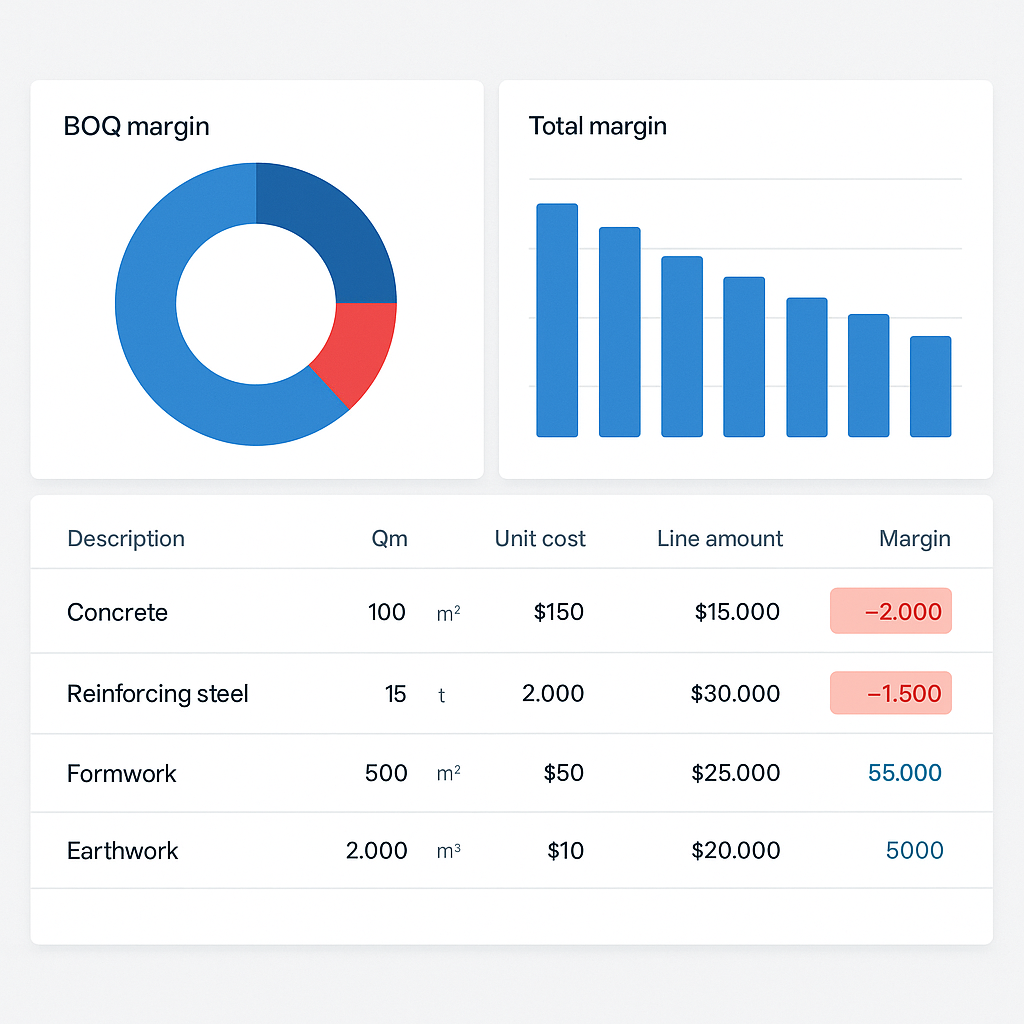
What if you could catch margin erosion before it spirals out of control? That’s where BOQ margin reports come in. These reports analyze profitability at the BOQ item level by comparing contracted values against actual costs for labor, materials, equipment, subcontractors, and overhead.
For example, let’s say a BOQ item for concrete includes:
| Resource | Estimated Cost | Actual Cost | Margin |
|---|---|---|---|
| Labor | ₹20,000 | ₹22,000 | -₹2,000 |
| Materials | ₹50,000 | ₹52,000 | -₹2,000 |
| Equipment | ₹10,000 | ₹9,000 | ₹1,000 |
| Subcontractors | ₹15,000 | ₹18,000 | -₹3,000 |
| Overhead | ₹5,000 | ₹6,000 | -₹1,000 |
| Total Margin | ₹100,000 | ₹107,000 | -₹7,000 |
Illustrative example — The BOQ margin report highlights negative-margin items (in red), so you can act fast.
How It Works
- Data Collection: The system pulls data from your procurement, billing, and project tracking modules to break costs down by resource type.
- Margin Analysis: It calculates profitability for each BOQ item, comparing estimated costs to actuals.
- Flagging Issues: Items with negative margins are flagged for investigation.
- Actionable Insights: You can drill down to see what’s causing the overrun—estimation errors, scope changes, or procurement inefficiencies.
Practical Steps to Save Margins
Here’s how to use BOQ margin reports effectively:
1. Review Weekly
Don’t wait until month-end to check profitability. Margin erosion can start small but snowball quickly if unchecked. A weekly review helps you spot issues early.
2. Investigate Negative-Margin Items
When you see an item flagged, dig deeper:
- Are material costs higher than planned? Check your procurement workflow.
- Is labor billing for overtime? Review timesheets.
- Did subcontractors add extra costs? Cross-check invoices against work orders.
3. Adjust Forecasts
If actual costs consistently exceed estimates, it’s time to revisit your forecasting methods. Are you using outdated rate schedules? Missing inflation adjustments? These small tweaks can save big money.
4. Take Corrective Action
Once you identify the problem, act fast:
- Renegotiate vendor contracts.
- Optimize labor allocation.
- Reduce equipment idle time.
Common Mistakes to Avoid
1. Ignoring Small Overruns
Small overruns might seem minor, but they can add up across multiple BOQ items, leading to significant margin loss.
2. Delayed Reviews
Margins are harder to recover the longer you wait. Weekly reviews are non-negotiable.
3. Overlooking Indirect Costs
Don’t stop at direct costs. Overheads like equipment maintenance and administrative expenses can quietly eat into margins.
FAQ
Q. What’s the first step to setting up BOQ margin tracking? A. Start by integrating your procurement and billing systems to ensure accurate data collection.
Q. What happens if I miss a weekly review? A. Margin erosion compounds over time. If you miss a review, prioritize catching up before the next project milestone.
Q. Can BOQ margin reports help with subcontractor payments? A. Yes, they highlight discrepancies between estimated and actual subcontractor costs, helping you reconcile payments.
Call-to-Action
If margin erosion is a recurring problem for your projects, consider implementing structured workflows and margin tracking tools. These can provide real-time profitability insights, so you can act fast when costs exceed estimates.
Learn more at JobNext.ai